The Key Performance Indicators section provides an overview of a collection of predefined graphical process metrics (KPIs). The purpose of these KPIs is to provide a quick overview and analysis of critical metrics within the system; they are available to users with the “Manager” and “Administrator” roles in the KPI Monitor.
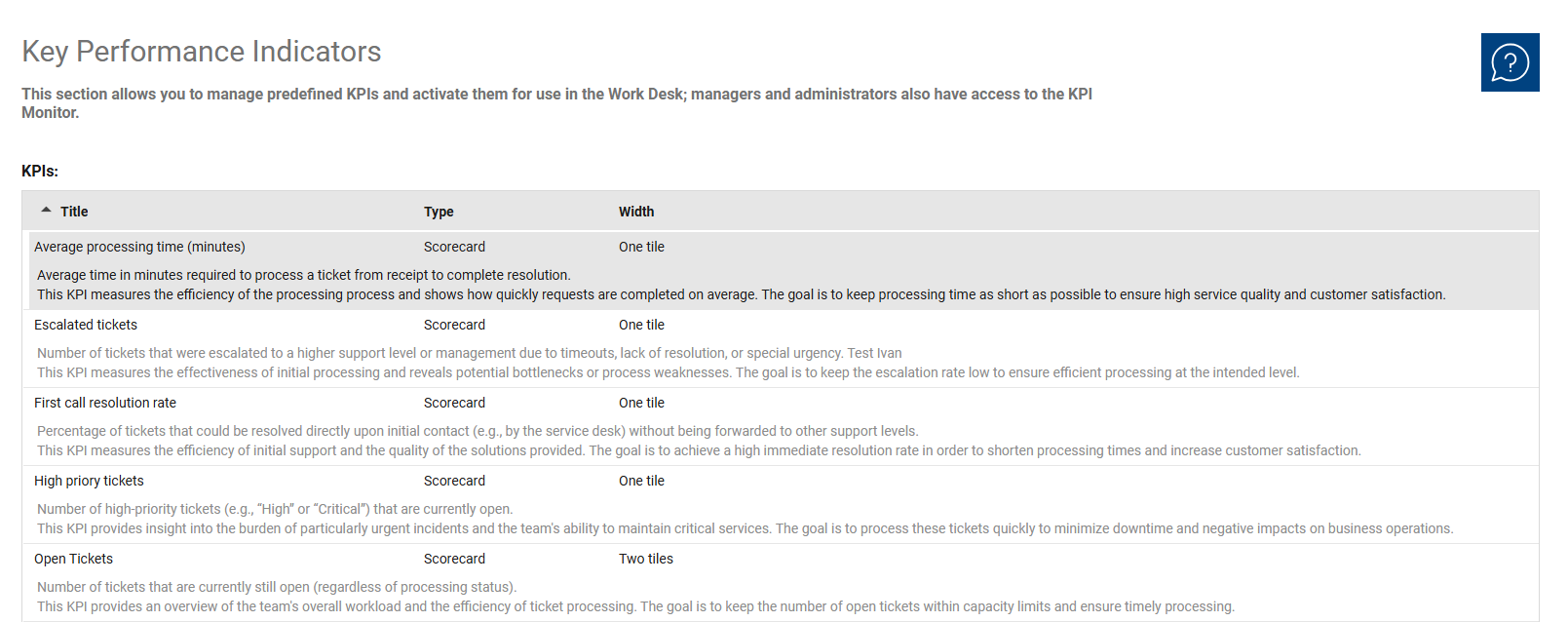
The following KPIs are currently available:
•Rejection rate: Percentage of received tickets that were rejected or dismissed after the initial review. This KPI reflects the quality of ticket creation and compliance with defined processes. The goal is to keep the rejection rate as low as possible to avoid unnecessary delays and additional communication efforts.
•Processing Time by Request Type: Average processing time for tickets, broken down by request type, such as incident, service request, or change request. This KPI enables a detailed analysis of process duration by ticket type and supports the optimization of specific workflows. The goal is to reduce processing times by request type in order to improve overall performance.
•Average processing time (minutes): Average time, in minutes, required to process a ticket from receipt to full resolution. This KPI measures the efficiency of the processing workflow and shows how quickly requests are resolved on average. The goal is to keep processing time as short as possible to ensure high service quality and customer satisfaction.
•Escalated tickets: Number of tickets escalated to a higher support level or to management due to timeouts, unresolved issues, or special urgency. This KPI measures the effectiveness of initial handling and highlights potential bottlenecks or process weaknesses. The goal is to keep the escalation rate low to ensure efficient handling at the appropriate level.
•High priority tickets: Number of high-priority tickets (e.g., “High” or “Critical”) that are currently open. This KPI provides insight into the workload associated with particularly urgent issues and the team's ability to maintain critical services. The goal is to resolve these tickets quickly in order to minimize downtime and negative impacts on business operations.
•Open tickets: Number of tickets that are currently still open (regardless of their processing status). This KPI provides an overview of the team’s overall workload and the efficiency of ticket processing. The goal is to keep the number of open tickets within the team’s capacity and ensure that tickets are processed in a timely manner.
•Open tickets with SLA times: Number of open tickets subject to defined SLA times (e.g., response or resolution times). This KPI provides an overview of open cases subject to SLAs and helps identify risks of SLA violations at an early stage. The goal is to prioritize these tickets to prevent SLA violations and ensure service quality.
•Open tickets by request type: Number of open tickets, broken down by request type, such as incident, service request, or change request.
This KPI provides insight into the nature of open requests and supports the analysis of trends as well as the optimization of processing workflows. The goal is to prioritize processing based on request type and improve service quality.
•Open tickets by responsible group: Number of currently open tickets, grouped by the respective support or specialist teams responsible. This KPI shows the distribution of the workload within the organization and helps identify bottlenecks or overloads in specific teams. The goal is to ensure a balanced distribution of tickets and to allocate resources efficiently.
•SLA reaction rate (type/priority): Percentage of tickets for which the initial response was provided within the agreed SLA times, broken down by ticket type and priority. This KPI reflects the team’s ability to respond quickly to incoming requests. The goal is to maintain a high response rate to ensure customer satisfaction and SLA compliance.
•SLA resolution rate (type/priority): Percentage of tickets resolved within the agreed SLA times, broken down by ticket type and priority. This KPI measures compliance with service level targets for service restoration. The goal is to achieve a high resolution rate to ensure the availability of critical services.
•SLA violations: Number of tickets for which the agreed-upon service level times (e.g., response or resolution times) were exceeded. This KPI measures compliance with contractually or internally defined service standards. The goal is to avoid SLA violations in order to ensure service quality and customer satisfaction.
•First call resolution rate: Percentage of tickets that were resolved during the initial contact (e.g., by the service desk) without being escalated to other support levels.This KPI measures the efficiency of first-line support and the quality of the solutions provided. The goal is to achieve a high first-contact resolution rate in order to reduce handling times and increase customer satisfaction.
•Ticketvolume: Total number of tickets received during a specified time period (per day). This KPI measures the service desk’s workload and serves as a basis for capacity planning and trend analysis. The goal is to monitor ticket volume in relation to available resources to ensure a consistently high level of service quality.
•Unprocessed tickets: Number of tickets received that have not yet been processed. This KPI measures the current workload in incident, problem, or service request management and highlights potential delays in the processing workflow. The goal is to keep the number of unprocessed tickets as low as possible to ensure fast response times and high service quality.

|
Note: The collection will be expanded with additional KPIs as needed. |
